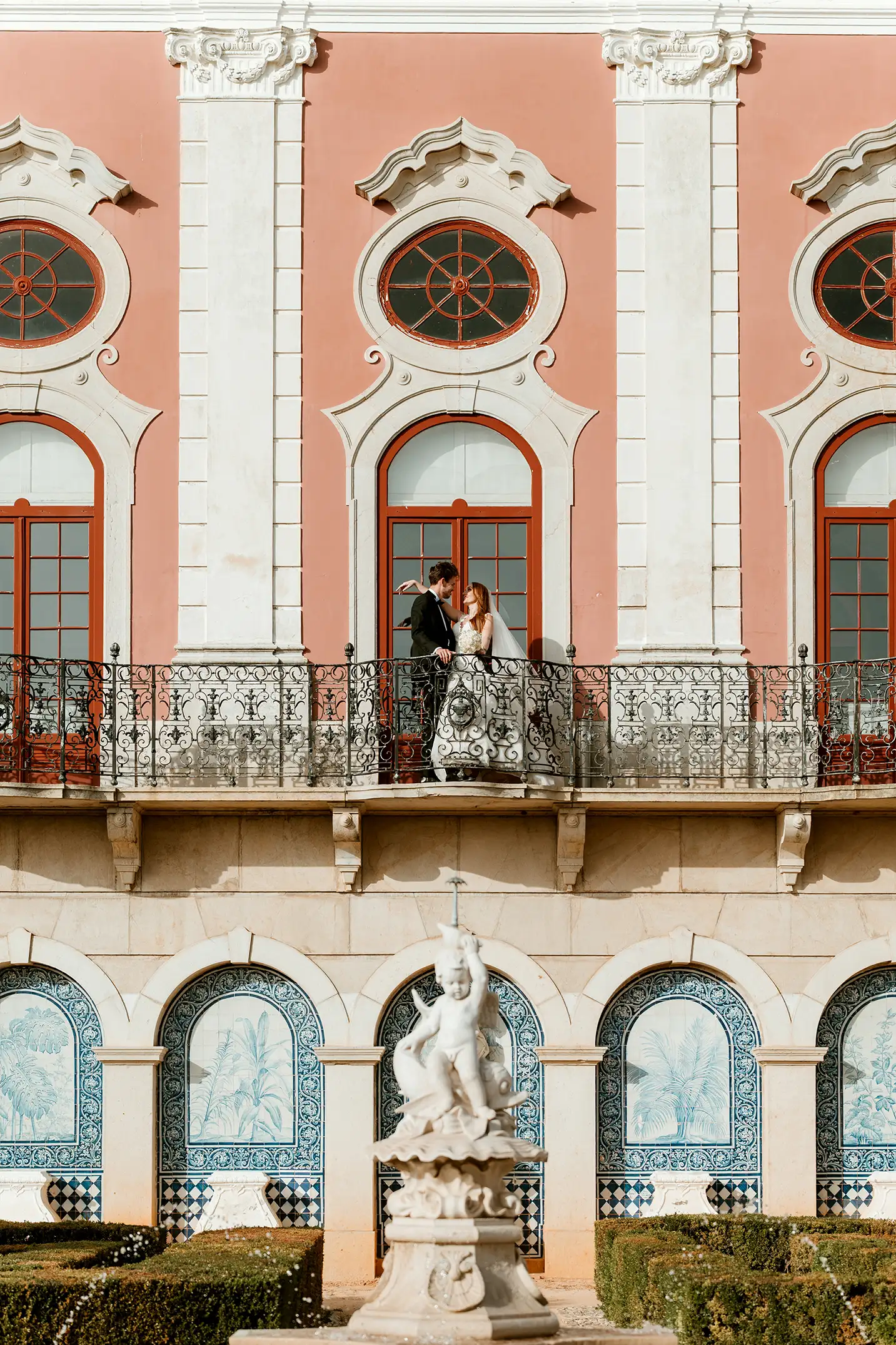
There are weddings that follow a script, and then there are weddings that feel like they were discovered rather than planned — as if they had been quietly waiting somewhere in time, fully formed, for the right people to step into them. Joana and Alex’s day at the Pousada de Estoi was firmly in the latter category.
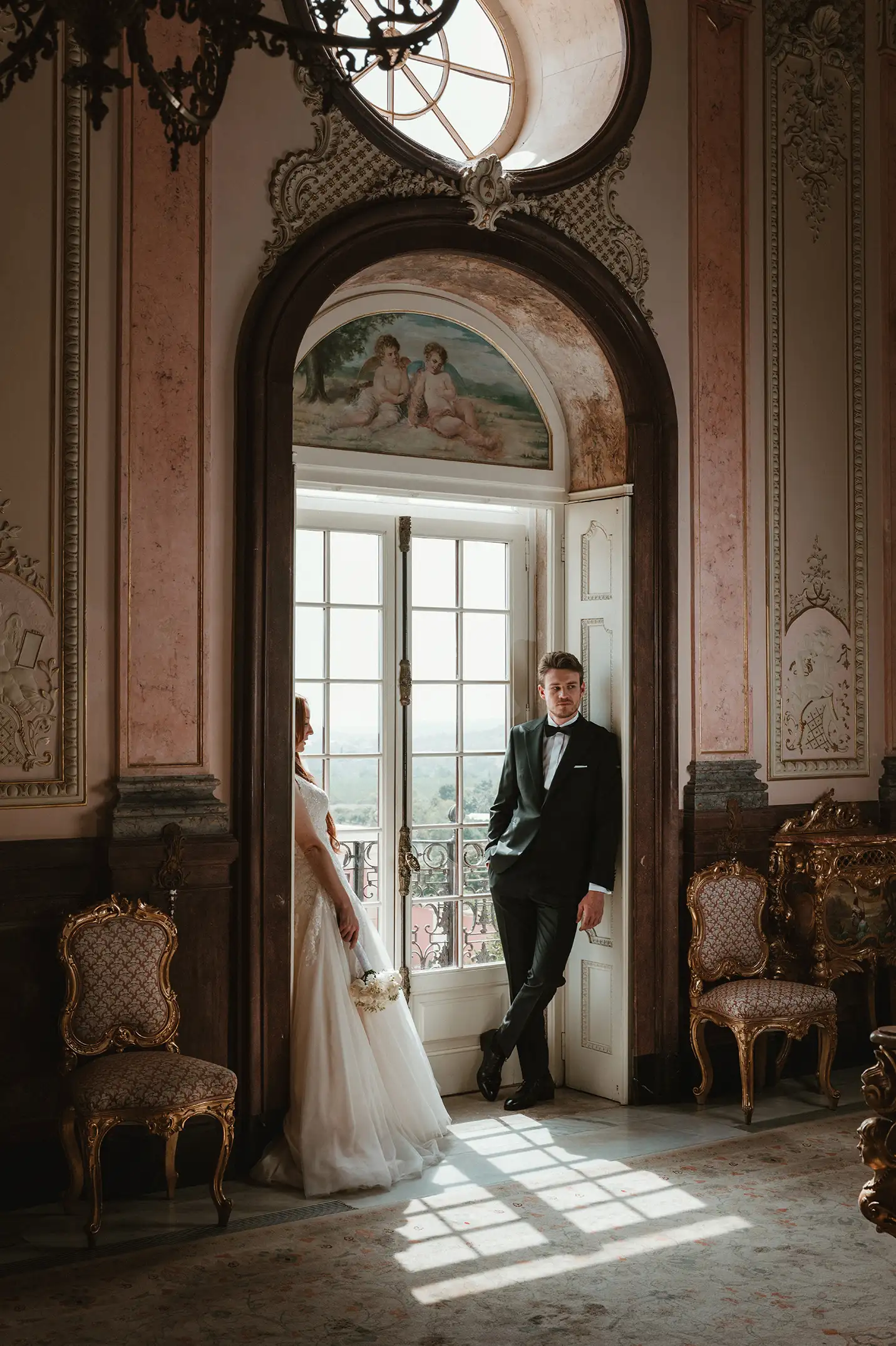
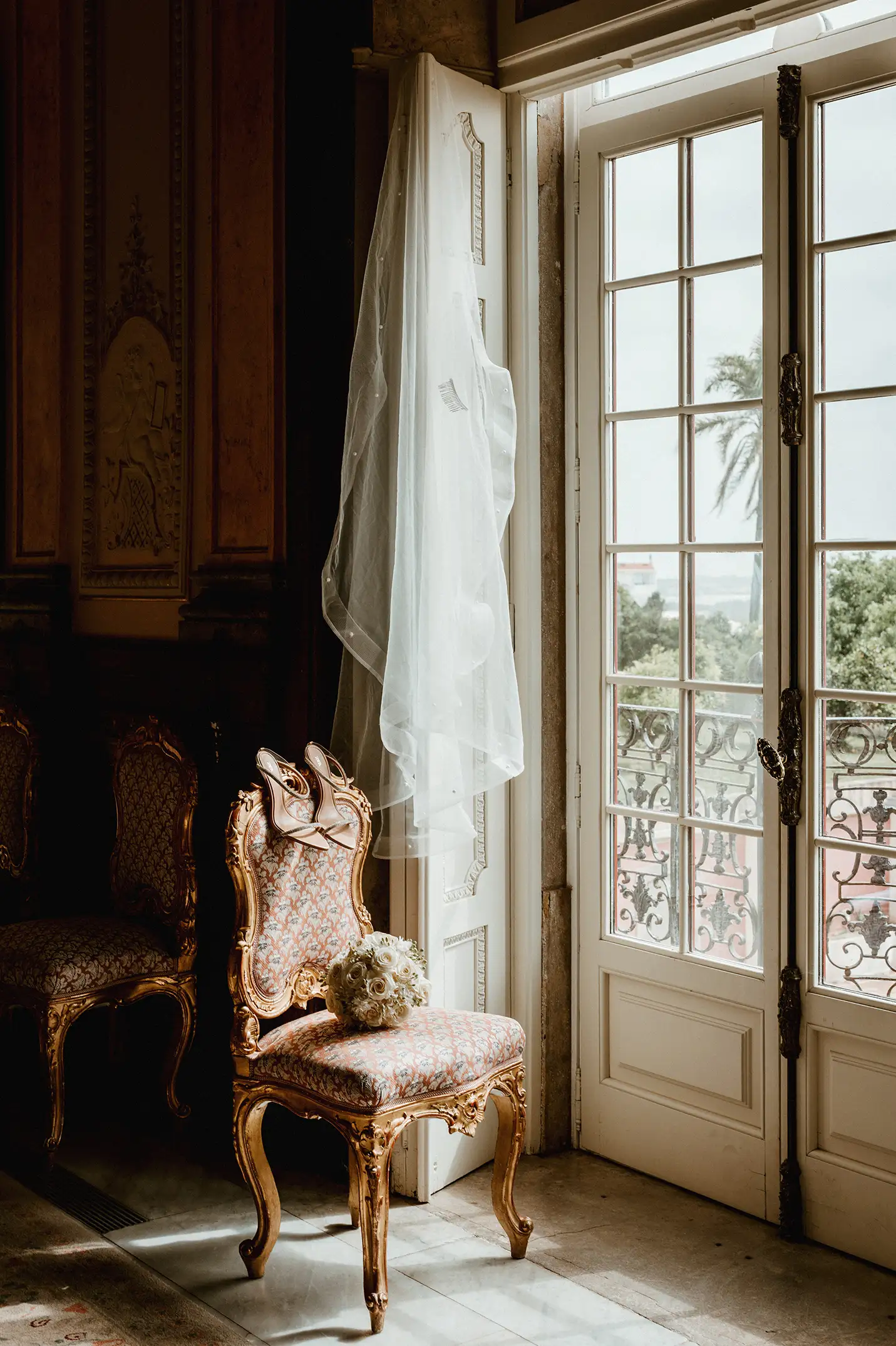
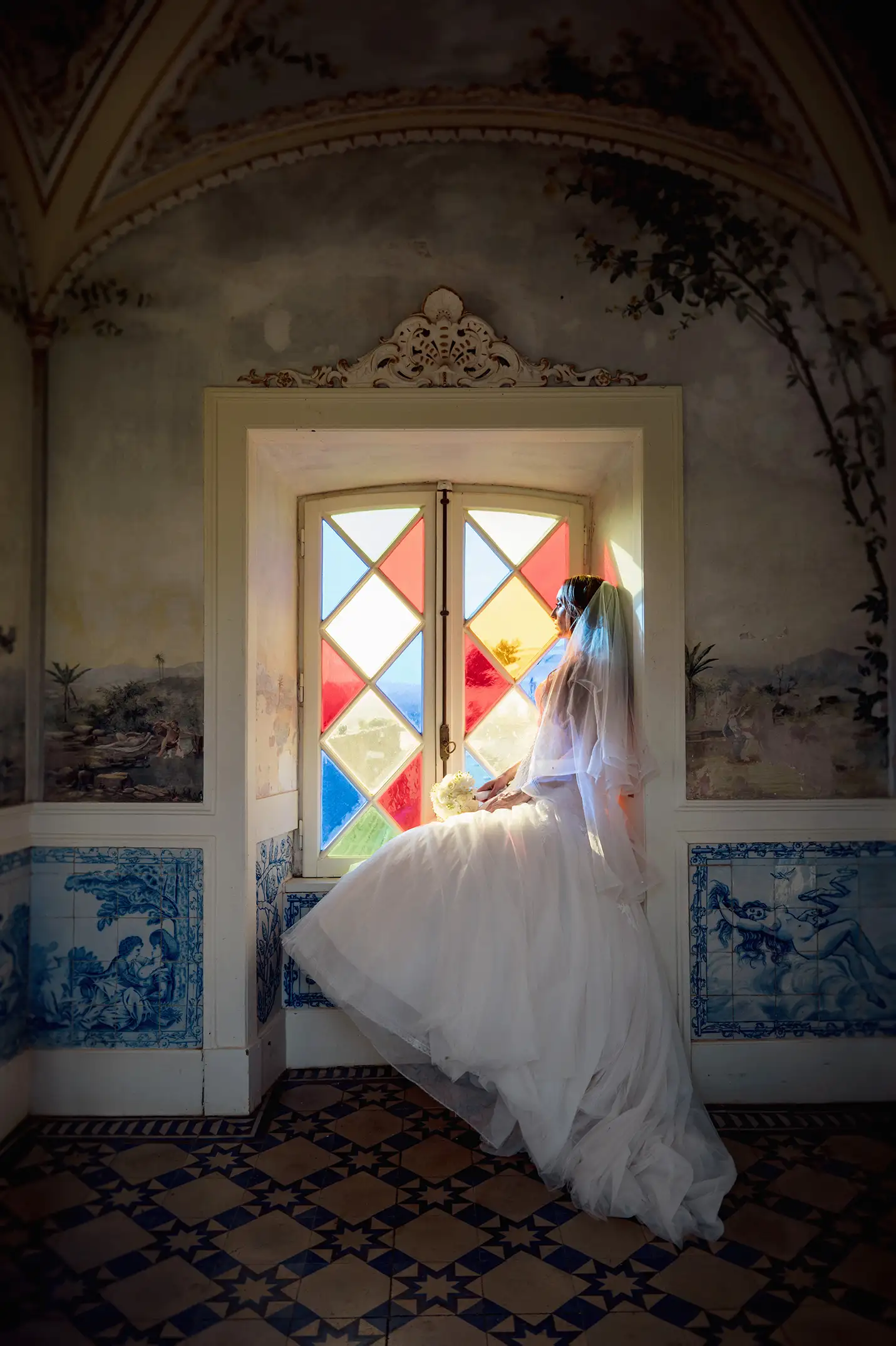
Set against the faded grandeur of a palace that seems to exist in a permanent state of beautiful erosion, the atmosphere was less about perfection and more about texture — light brushing against cracked walls, shadows stretching across tiled floors, silence interrupted by laughter that echoed just enough to feel cinematic. There’s something about that place: it doesn’t ask to be photographed, it demands to be interpreted.
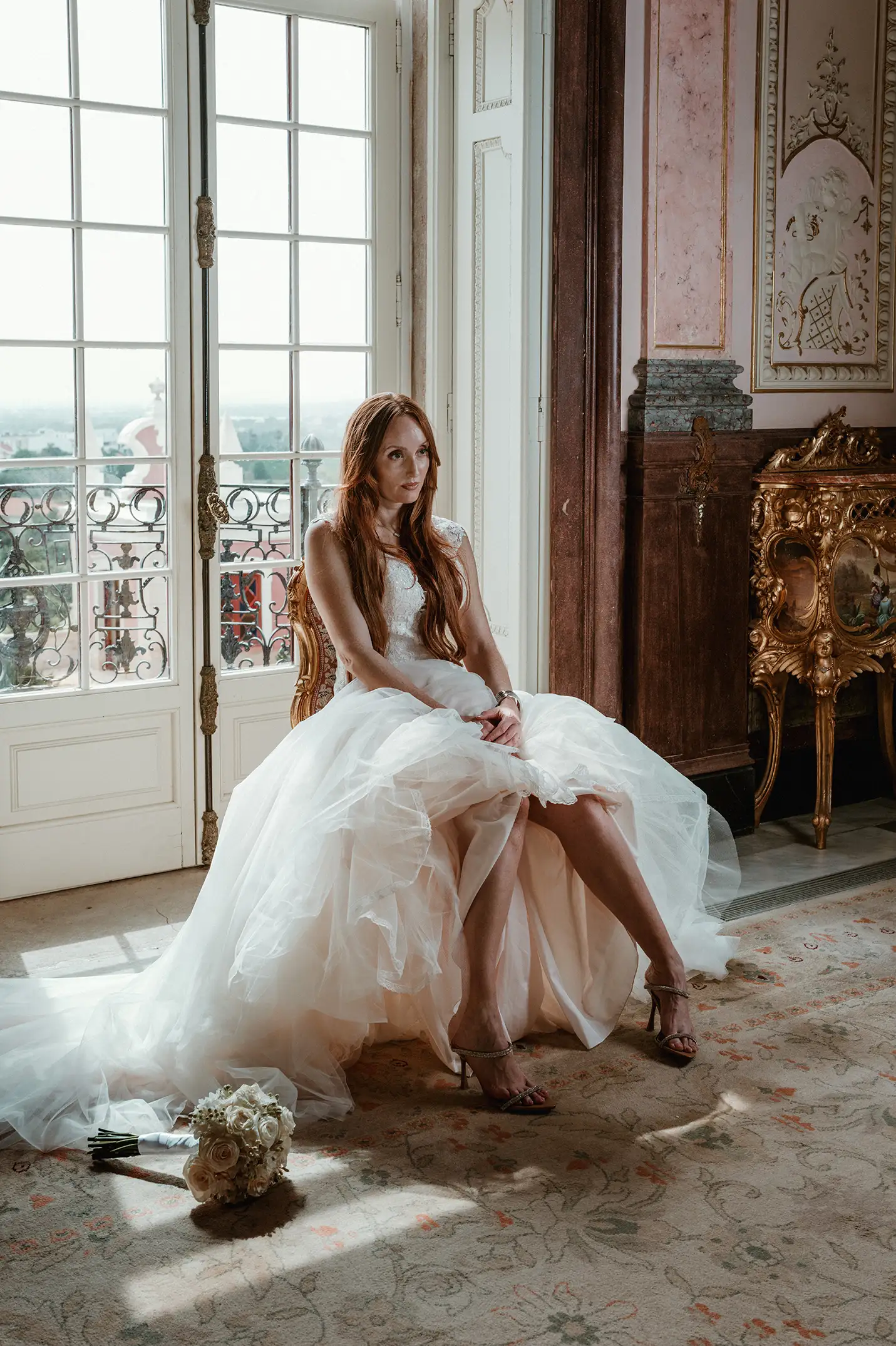
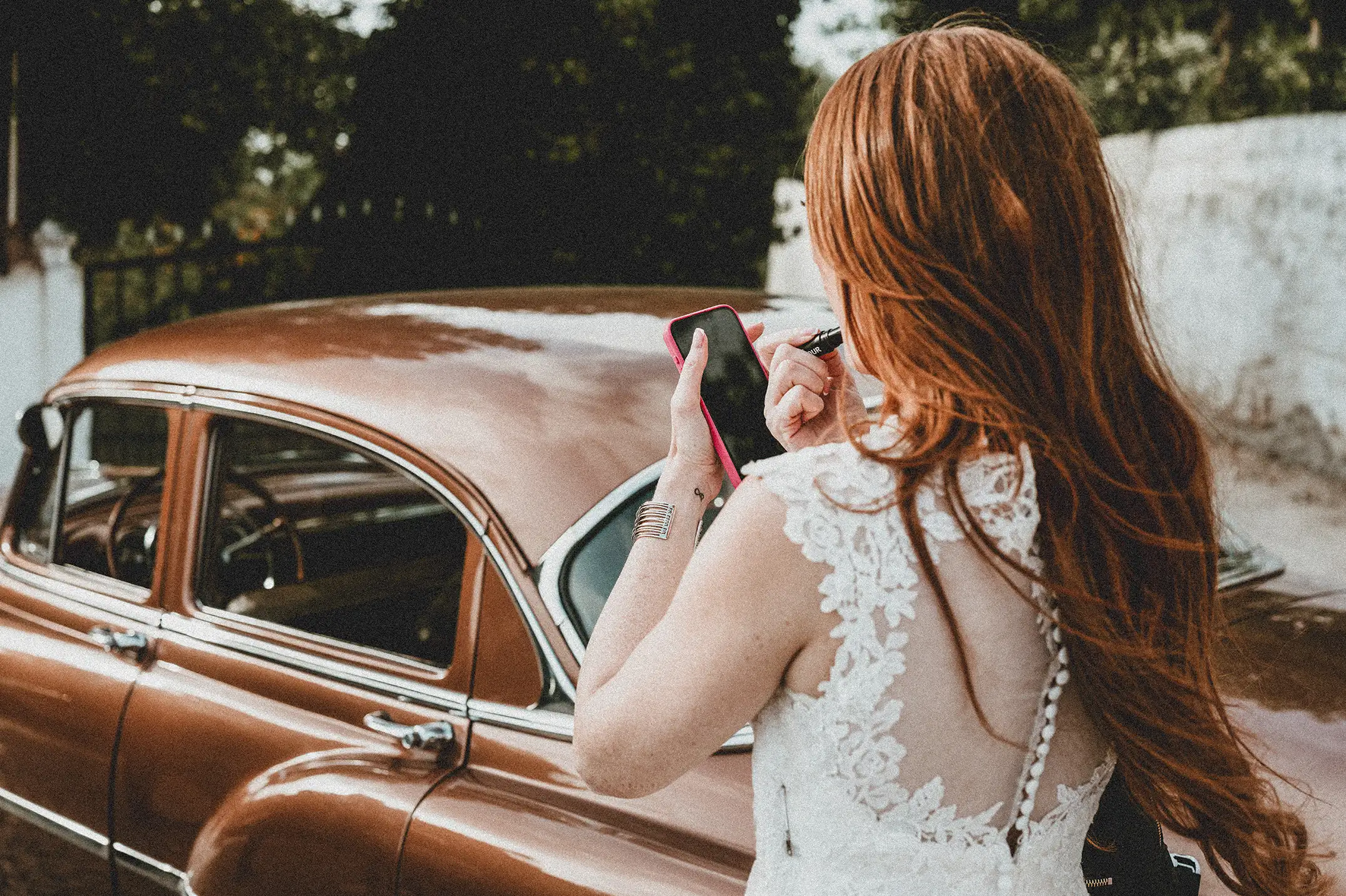
From the outset, the visual language of the day was clear. Joana’s copper hair — not subtle, not polite, but vivid and unapologetically alive — became the chromatic anchor. It wasn’t just a detail; it was a directive. Everything else seemed to orbit around it.
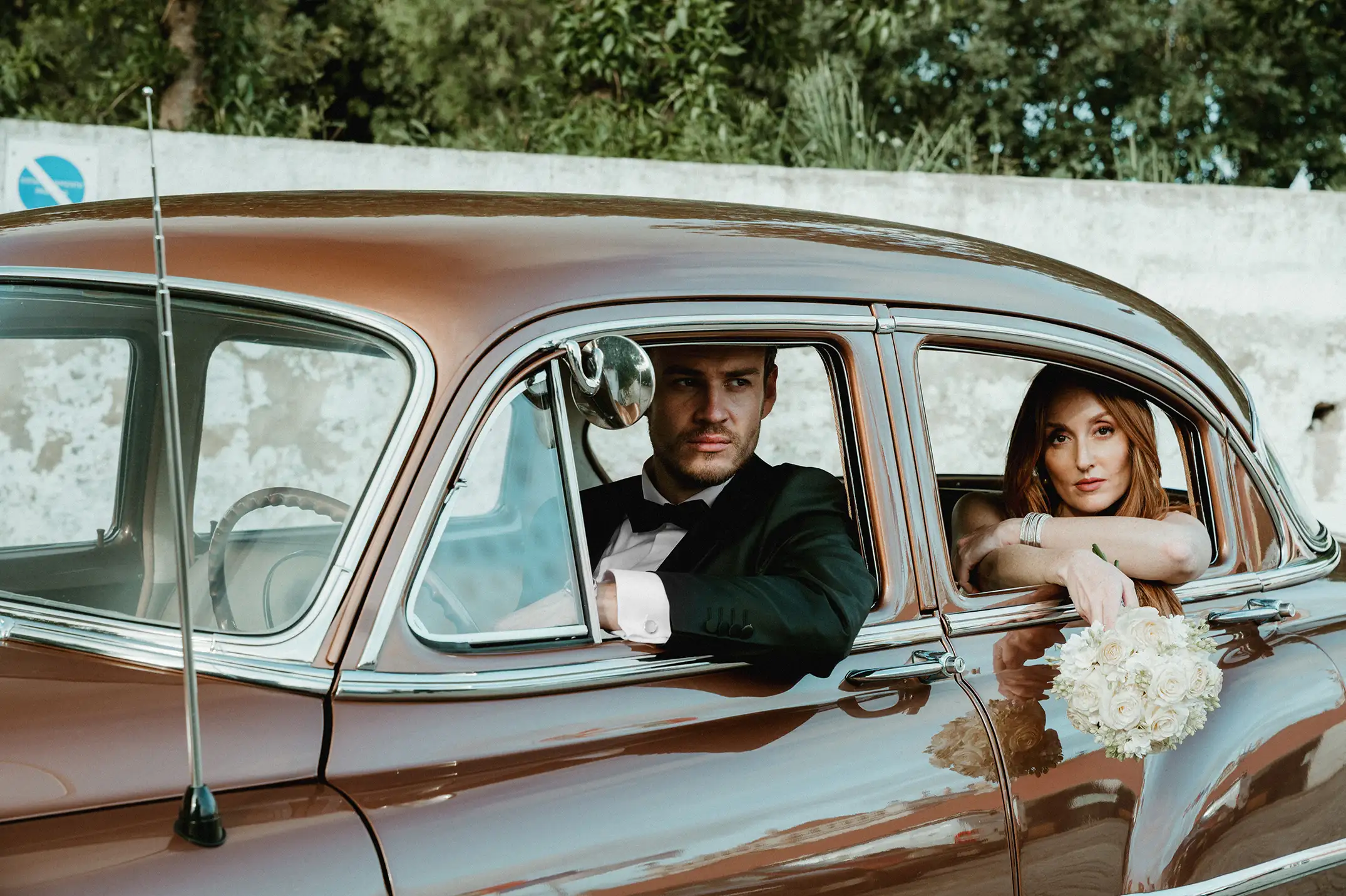
The vintage Chevrolet, in a tone that mirrored her hair almost too perfectly to be coincidence, felt less like a prop and more like an extension of her presence. The drinks leaned heavily into that same spectrum — spritz tones, burnt orange, amber — catching the light in a way that made every glass feel like a still life. Even the cake, often an afterthought in visual storytelling, carried delicate accents that echoed the palette without forcing it.
Nothing screamed coordination, but everything spoke the same language.
Shot entirely on Leica equipment, the images carry that particular signature people try to define and rarely succeed — the so-called “Leica colors.” It’s not just about color science. It’s about restraint. About allowing imperfection to exist without correction. About letting grain breathe instead of suffocating it with clarity.
There’s a softness that isn’t softness. A sharpness that doesn’t feel digital. Skin tones that sit somewhere between memory and reality. The result isn’t clean — and that’s precisely the point.
Grain was not an effect added later; it was part of the intention from the beginning. A quiet nod to something older, something tactile. The kind of visual noise that makes an image feel like it has lived a life before you even look at it.
Joana and Alex moved through the day with an ease that made everything else irrelevant. No forced moments, no exaggerated gestures — just presence. The kind that doesn’t need direction. The kind that allows a photographer to step back and observe rather than intervene.
There’s a certain luxury in that. Not the obvious kind, but the rare kind: time, space, trust.
The palace itself played its role perfectly. Not as a backdrop, but as a character. A decaying aristocracy that refuses to disappear, holding onto its elegance in a way that feels both fragile and defiant. It framed the couple without overshadowing them, adding weight without stealing focus.
And somewhere in between all of this — the copper tones, the textured light, the quiet confidence of two people completely in sync — the images began to assemble themselves.
Photography, at its core, is often described as capturing moments. But that feels insufficient here. This wasn’t about capturing. It was about navigating. About moving through layers — light, color, emotion — and finding alignment between them.
A kind of visual cruising, if you will. Not rushed, not rigid. Just attentive.
What remains is not just a record of a wedding, but a collection of frames that feel cohesive without being controlled. Imperfect in all the right ways. Honest, but curated through instinct rather than formula.
Joana and Alex didn’t just have a wedding at Estoi.